
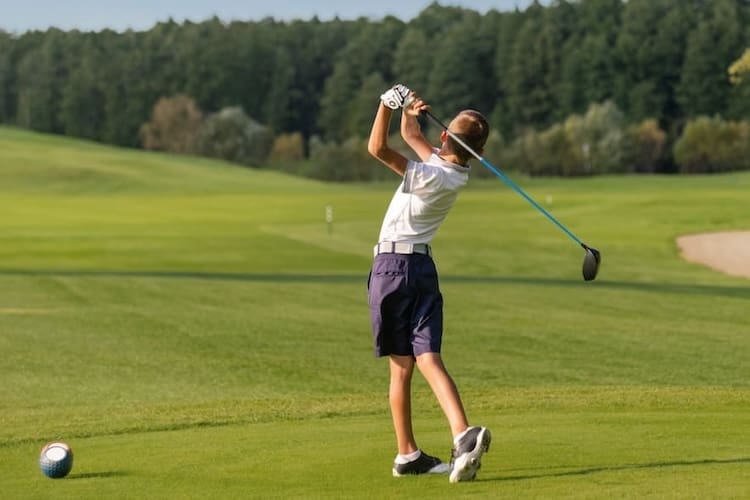
The best thing about starting a child in golf is also the part most parents get backward. At the beginning, the goal is not to teach a good swing. The goal is to make sure your child walks away from each session wanting to come back. Skill is easy to add later to a kid who loves the game. It is nearly impossible to add to a kid who decided at age seven that golf is boring and stressful, and the fastest way to create that second kid is to coach the fun out of the first few months.
Between the two of us we have taught more than 10,000 lessons, and Thomas runs most of our junior work, so a good share of those hours have been spent with young players and the parents standing a few feet away wanting to help. This is the guide we wish every one of those parents had read first. It covers when a child is actually ready, how to introduce the game at home before any lesson, what genuinely good junior coaching looks like so you can recognize it anywhere, and the one parent habit that does more damage than any swing flaw. None of it requires you to be a golfer yourself.
What’s the Best Age to Start a Child in Golf?
Parents want a number, and the honest answer is that readiness matters far more than age. We have taught engaged, happy four-year-olds and we have seen pushed six-year-olds who would rather be anywhere else. That said, child development does follow a rough arc, and matching your expectations to your child’s stage is most of the battle.
| Age range | What it’s really about | What to skip |
| 3 to 5 | Play and exposure. Holding a club, hitting foam balls, rolling putts, riding along. Pure fun. | Any technical instruction. Scorekeeping. Full-length clubs. |
| 6 to 9 | First real fundamentals through games. Grip, a simple setup, contact, short game, basic etiquette, all kept light. | Long lessons, heavy mechanics, pressure to be “good.” |
| 10 to 13 | Skill building and the actual game. Strategy, real swing work, playing holes, maybe first competition. | Treating it as a job. Over-coaching every shot. |
| 14 and up | Focused improvement. Individual work on a developing swing, course play, competitive golf if they want it. | Assuming it’s too late. Plenty of strong players start here. |
The table is a guide, not a gate. A mature five-year-old might slot into the next stage early, and a busy nine-year-old might still want the game to be all play, which is completely fine. What stays constant at every age is that fun comes first and instruction follows interest, never the other way around.
Is My Child Actually Ready for Lessons?
A child can swing a club years before a child is ready for instruction, and pushing formal lessons too early is how you spend money to make a kid like golf less. Rather than watching the calendar, watch for these signs, which tell you far more than a birthday does.
Your child asks to go, rather than being taken. They can follow a simple two-step instruction and stay with it for a few minutes without drifting off. They show curiosity about the actual task, asking how to hit it farther or why a shot did what it did. And they can handle a miss without melting down, because golf hands out far more misses than makes, and a child who cannot yet tolerate that will struggle with structured practice no matter how talented.
If those boxes are checked, your child will get real value from lessons. If they are not, there is nothing wrong, and there is plenty you can do at home in the meantime to build toward readiness without any pressure at all. That at-home work is genuinely the most important coaching a young child receives, and it costs nothing.
How to Introduce Golf at Home, Before Any Lesson
You do not need a coach, a course, or any skill of your own to give your child a wonderful start. You need a few soft objects and the discipline to keep your mouth shut about technique. Here is the sequence Thomas gives parents of young kids, and it works whether or not the child ever sets foot in one of our clinics.
Start indoors with putting, because it is safe, it requires no swing, and a child can succeed at it immediately. Set a cup or a plastic tumbler on its side on the carpet and let them roll foam balls into it from a few feet. Make it a game with a small celebration for each make. Then move to gentle chips and swings in the yard or a park with foam or plastic balls, with one rule for you: let them swing however they want. A young child holding the club like a baseball bat and swinging with joy is exactly where they should be. Resist every urge to fix it. The fixing comes later, from a coach, when they are ready.
Take them to a driving range and let them hit a small bucket for the fun of it, no instruction attached. Watch golf on television together and let them imitate what they see. And bring them along for a few holes where they can drop a ball wherever they like and hit it, skipping the rules entirely. Every one of these builds the thing that actually predicts whether your child sticks with golf, which is a positive association with it. Keep the sessions short, fifteen or twenty minutes for the youngest kids, and always stop while they still want more. A child who begs for five more minutes is a child who will ask to come back next week.
What Does Good Junior Coaching Actually Look Like?
When your child is ready for a program, you will want to judge whether a given one is any good, and you do not need to be a golfer to do it. A strong junior program looks almost nothing like an adult lesson, and that is the point. Here is what we build into ours and what you should look for anywhere.
Sessions are short and fast moving, because a child’s attention is the real constraint, not their swing. Instruction comes wrapped in games and challenges rather than lectures, since a kid will happily do fifty putts as a contest and zero putts as a drill. The fundamentals are there, grip, a simple setup, contact, and short game, but they are introduced a sliver at a time and never all at once. Good junior coaches understand child development as much as they understand golf, and they keep the room positive, because a discouraged eight-year-old learns nothing. And the equipment fits the child, which we will come back to, because too-heavy clubs quietly sabotage young players.
What you do not want to see is a child being drilled on mechanics like a miniature adult, standing in long lines waiting for a turn, or leaving sessions deflated. If your child comes out smiling and talking about a game they played, the program is doing its job, regardless of how much “technique” was covered. Skill follows engagement at this age, reliably and in that order.
Should Kids Start in Group or Private Lessons?
For most young children, groups are the better start, and not only for the obvious reason. Yes, the social energy keeps them engaged in a way a one-on-one session rarely can, but groups also teach the parts of golf that matter most early, which are etiquette, patience, taking turns, and handling the ups and downs alongside other kids doing the same. A child learns to tolerate a bad shot much more easily when the kid next to them just hit one too.
Our junior clinics are built around exactly that group energy, with games doing the teaching. Private instruction earns its place later, when a child has chosen the game and wants to work on a specific, developing swing, usually somewhere in the pre-teen years or beyond. There is also a middle path that a lot of families love, where a parent and child learn together, which builds a practice partner who is around all the time rather than only during lessons. Our parent and child clinics exist for that, and the bonus is that the parent stops giving accidental bad advice once they understand what the coach is actually after.
The Parent Habit That Does the Most Damage
This is the hard part, and Jack raises it with families more than any swing topic, because it undoes more young golfers than any technical flaw. The most common way a child loses interest in golf is an overbearing parent on the sidelines, correcting every shot, sighing at every miss, and turning what should be play into a performance the child is failing in real time.
We understand the instinct completely. You want to help, and golf looks simple from a folding chair. But a child cannot enjoy a game while being audited, and enjoyment is the entire foundation at this stage. The most useful thing you can do during a lesson or a practice session is to be a quiet, encouraging presence, celebrate effort rather than results, and let the coach coach. Praise the swings your child likes, not the ones you think were correct. Ask them afterward what was fun, not what they got wrong. Golf will teach your child patience, focus, honesty in keeping their own score, and how to handle a bad break and move to the next shot, but only if you let the game do the teaching rather than racing ahead of it. Those lessons are why the game is worth starting in the first place, and they land far better from a missed putt than from a parent’s correction.
Is Golf Good for Kids?
Parents often start their child in golf hoping for a swing and are surprised by everything else the game delivers, so it is worth saying plainly. Golf is one of the few sports a person can play from age four to age ninety, which makes anything your child learns now a deposit into decades of future enjoyment. It is gentle on growing bodies, with none of the collision risk of many youth sports. It builds hand-eye coordination, balance, and full-body movement that carries over into other activities.
The quieter benefits are the ones that tend to matter most to the parents we talk to years later. Golf demands patience, because the next shot will not wait for you to finish sulking about the last one. It teaches honesty, because children keep their own score and learn that the number is theirs to report truthfully. It rewards focus and composure under a little pressure. And because it hands out far more failure than success, especially early, it quietly builds the ability to stay positive when things are not going your way. Those are not golf skills. They are life skills that golf happens to teach, and they show up whether your child plays one season or fifty.
How Do I Keep My Kid Interested Over Time?
Early enthusiasm is easy. Sustained interest is the real challenge, and it comes down to keeping golf in the category of play for as long as you can. Let your child set the pace of how seriously they take it, rather than setting it for them. Keep practice varied and game-based well past the age where you might be tempted to make it serious, because a bored kid quits and a challenged-but-amused kid stays. The same principle that governs adult improvement applies here in a gentler form: progress comes from regular, enjoyable repetition rather than occasional intense sessions, a point we make at length for grown-ups in our piece on how to get better at golf, and it holds just as true for a nine-year-old.
Above all, follow their interest rather than your hopes. Some children will want to compete and chase a team or a tournament, and the path opens up for them when they ask for it. Others will simply enjoy playing with family on a summer evening for the rest of their lives, which is its own kind of success and arguably the better one. Both outcomes are wins. The only real loss is a child pushed so hard, so early, that they walk away from a game they could have loved for sixty years.
A Quick Word on Equipment for Kids
You do not need much, and you should not spend heavily on a beginner, but the one thing worth getting right is club size. A child swinging clubs that are too long and too heavy, which is what happens when you cut down an old adult set, learns to compensate in ways that are hard to undo and tiring enough to kill the fun. Look for lightweight junior clubs that match your child’s height, with forgiving heads that help them make solid contact, because nothing builds a young golfer’s confidence like the ball actually getting airborne.
Start with just a few clubs, a putter, a wedge, a mid iron, and something to hit off the tee, for the same reason we tell adult beginners to carry a half set: fewer choices, more focus, more fun. You can add to it as they grow, both in size and in interest. And if you are unsure what fits, any good junior coach or club fitter will help you sort it, because the right-sized club in a child’s hands is one of the simplest advantages you can give them.
Where Parents Fit In
Getting a child into golf well is mostly about restraint, which is a strange thing to ask of a loving parent but the truest advice we can give. Keep it fun, follow their readiness rather than the calendar, build the foundation through play at home, hand the actual coaching to someone who understands kids, and protect your child’s enjoyment of the game as if it were the whole point, because at the start it genuinely is.
The two of us run junior clinics and parent-and-child sessions throughout the year, indoors through the Chicago winter and outside when it warms, with families coming in from Palos Heights and across the western and southwest suburbs. If you are nearby, you can see how we approach it at our Palos Heights location. And if you are anywhere else in the world, the heart of this guide travels fine without us. Give your child foam balls, a carpet, a little time, and the freedom to love the game at their own pace, and you have already done the most important part.